Mold Removal & Remediation in Halifax, NS
IICRC-certified mold removal and remediation for Halifax properties: containment, safe removal, and clearance testing.
Mold Removal & Remediation in Halifax — Safe Removal, Clearance-Tested
Halifax's Atlantic climate — wet, humid, and with significant temperature swings — creates some of the most mold-prone conditions in Canada. With over 1,400 mm of annual precipitation, fog rolling in from the harbour, and basements that run at elevated relative humidity year-round, mold growth is an ever-present risk for Halifax property owners. When water damage — from any source — isn't properly dried within 24–48 hours, mold colonisation in wall cavities, framing, and insulation is almost inevitable.
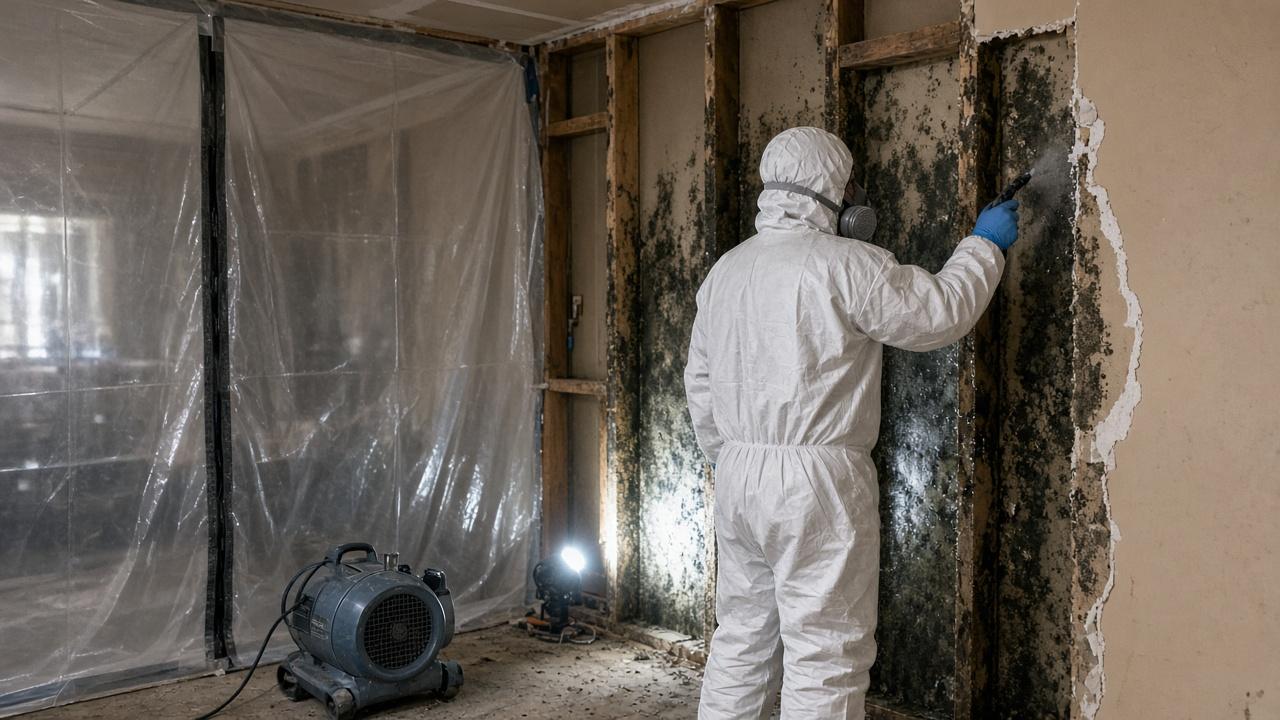
Mold remediation isn't just about removing visible growth. By the time you see mold on a wall surface or smell it in a room, there's typically a much larger colony in the wall cavity, in insulation, or in framing behind the drywall. Proper remediation means establishing containment to prevent cross-contamination, removing affected materials under HEPA filtration, treating structural framing with EPA-registered agents, and conducting clearance testing to confirm the space is safe before reconstruction.
Our IICRC-certified mold remediation crews aren't handymen with bleach. They're trained technicians with containment equipment, HEPA vacuums, negative air machines, and the post-remediation verification process that your insurance company, your doctor, and your family's health require.
Water damage gets worse every hour it sits. Call us and a certified crew will be dispatched to your Halifax property.
902-904-0526Send a MessageCertifications
Mold Remediation Services in Halifax
A proper mold remediation engagement in Halifax follows a structured protocol from assessment through clearance:
Mold Assessment & Mapping
Visual inspection, moisture mapping, and air sampling identify the extent of mold growth — including hidden colonies in wall cavities, attics, and crawl spaces.
Containment Establishment
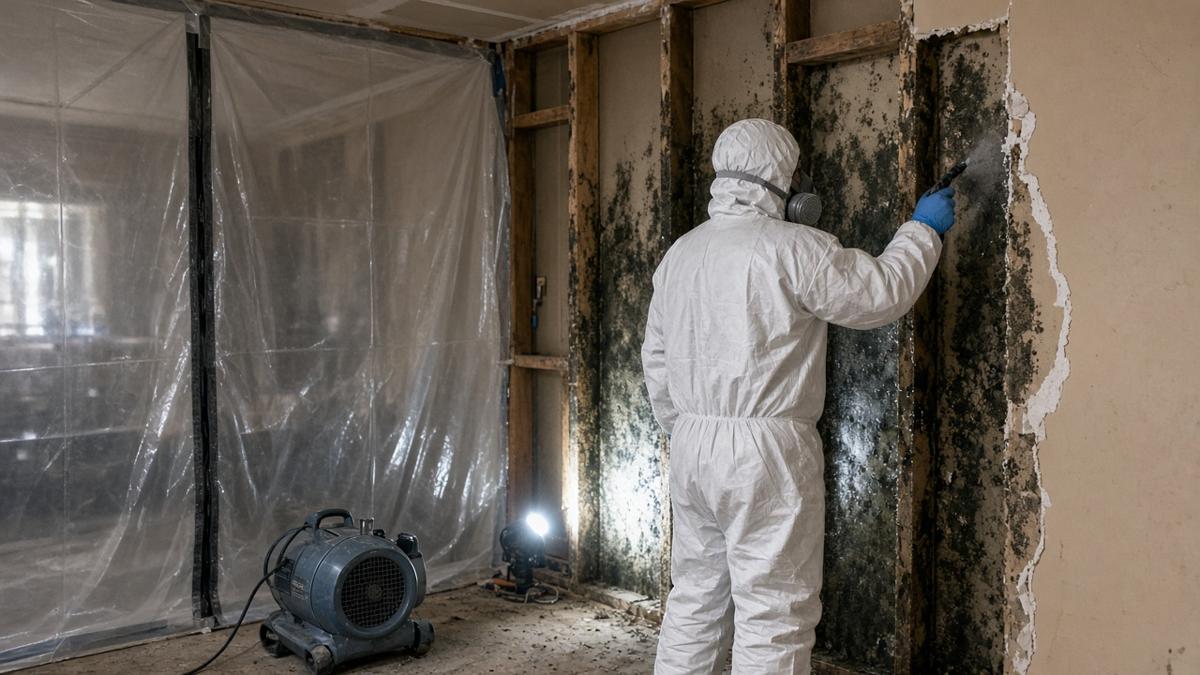
Physical containment with polyethylene sheeting and negative air pressure prevents mold spores from spreading to unaffected areas of your Halifax home during remediation.
HEPA Filtration
Negative air machines with HEPA filtration capture airborne mold spores during removal, maintaining air quality in adjacent spaces.
Affected Material Removal
Mold-affected drywall, insulation, carpet, and other porous materials are bagged in containment, removed, and disposed of per environmental regulations.
Surface Cleaning & Treatment
Structural framing and hard surfaces are HEPA-vacuumed, cleaned, and treated with EPA-registered fungicides appropriate for the mold species and surface type.
Source Moisture Control
Mold always has a moisture source. We identify and address the underlying moisture issue — whether it's a plumbing leak, roof intrusion, or chronic high humidity — as part of the remediation.
Clearance Testing
Post-remediation air and surface sampling is performed by an independent third party to confirm spore counts are within acceptable limits before reconstruction begins.
Reconstruction
With clearance confirmed, new insulation, drywall, and finishes are installed to complete the restoration.
Mold in Halifax Homes — What You're Actually Dealing With
Halifax's most common residential mold species are Cladosporium, Penicillium, Aspergillus, and in more severe water-damage situations, Stachybotrys chartarum (commonly called black mold). The name 'black mold' is something of a misnomer — Stachybotrys is characterised by its toxin production, not just its colour. But all significant mold colonisation represents a health concern and requires professional remediation, regardless of species.
The mold risk in Halifax is particularly elevated in certain scenarios. Attic mold — caused by insufficient attic ventilation or vapour barrier failures allowing warm, moist interior air to condense on cold roof sheathing — is extremely common in Halifax's housing stock. Basement and crawl space mold from chronic high relative humidity and periodic water intrusion is similarly prevalent. And post-water-damage mold — the consequence of any water loss that wasn't properly dried within 48 hours — is the most preventable and the most commonly seen by restoration crews.
It's worth understanding that bleach doesn't kill mold on porous surfaces. This is one of the most persistent myths in DIY mold treatment. Bleach treats surface discolouration on non-porous surfaces, but it doesn't penetrate into wood, drywall, or insulation where mold roots (hyphae) extend. Treating visible mold growth on framing with bleach and covering it up is not remediation — it's concealment. The hyphae remain viable in the substrate and can produce new surface growth as soon as conditions allow.
Clearance testing is the final step that confirms remediation was successful, and it's non-negotiable from an insurance and health standpoint. A remediation job without post-remediation verification is like surgery without a follow-up appointment — you don't actually know whether the problem is resolved. Our Halifax network contractors always conduct clearance testing through an independent testing party, so the results aren't self-reported.
Our Mold Remediation Process in Halifax
Every mold remediation job follows our IICRC-certified protocol. Here's what that looks like in practice:
- 1
Initial Assessment
Visual inspection, moisture mapping, and if indicated, air and surface sampling to characterise the extent of mold growth and identify the species present.
- 2
Remediation Plan
A written remediation plan is developed specifying the scope of work, containment approach, materials to be removed, cleaning methods, and clearance criteria.
- 3
Containment Setup
Physical containment barriers and negative air pressure are established before any disturbing work begins. This is how you prevent a contained mold problem from becoming a whole-house problem.
- 4
Material Removal
Mold-affected materials are removed under containment — bagged, sealed, and transported out without contaminating adjacent areas.
- 5
HEPA Vacuuming & Cleaning
All surfaces within the remediation zone are HEPA-vacuumed and cleaned with appropriate cleaning agents before fungicide application.
- 6
Fungicide Application
EPA-registered fungicidal treatments are applied to structural framing and hard surfaces. Encapsulants are used where appropriate on treated framing.
- 7
Drying Verification
The moisture source is confirmed as resolved and structural materials are confirmed dry before containment is removed.
- 8
Clearance Testing
Independent air and surface sampling confirms spore levels are within acceptable limits. The clearance report is provided to the property owner.
- 9
Reconstruction
With clearance in hand, reconstruction can proceed. New insulation, drywall, and finishes restore the space to pre-loss condition.
Why Certified Mold Remediation Matters in Halifax
Mold remediation done improperly is worse than no remediation — it spreads the problem. Here's why credentials matter:
IICRC Certified Remediation
Every job follows the industry standard — containment, proper removal, EPA-registered treatment, and independent clearance testing. No shortcuts.
Independent Clearance Testing
We insist on third-party clearance testing. Self-reported clearance is a conflict of interest. Independent results protect you.
Source Moisture Resolved
Removing mold without fixing the moisture source just sets up the same problem again. We address the source as part of every remediation scope.
Common Questions About Mold Remediation in Halifax
Is all mold in my Halifax home dangerous?
Some mold species are more toxic than others, but any significant mold colonisation represents a health concern and should be professionally assessed. People with allergies, asthma, or compromised immune systems are particularly vulnerable. When in doubt, get it tested and get it remediated properly.
Can I remove mold myself in Halifax?
For very small, isolated surface mold on non-porous materials — less than 10 square feet — some sources say DIY cleanup is reasonable with proper PPE and cleaning agents. But this threshold is conservative: if mold is in a wall cavity, in attic sheathing, in insulation, or has been present for any significant time, professional remediation is the appropriate approach. Disturbing significant mold growth without containment spreads spores throughout the home.
Will my insurance cover mold remediation in Halifax?
Coverage depends on the cause of the mold. Mold resulting from a sudden and accidental covered water event (burst pipe, roof breach) is typically covered under the water damage claim. Mold resulting from gradual seepage, chronic humidity, or maintenance neglect is typically excluded. Your policy wording matters, and so does the documentation of the loss event and its timeline.
How long does mold remediation take in a Halifax home?
A small isolated mold job — one room, caught early — can be completed in 1–3 days including clearance. A significant multi-room remediation involving attic, basement, and wall assemblies can take 1–2 weeks. Reconstruction time is additional. We provide a detailed scope and timeline before work begins.
Related Restoration Services
Halifax Water Damage Restoration handles all water-related restoration needs across Halifax and the surrounding region. Return to the homepage for a full overview of what we do.
Ready to Get Your Mold Remediation Started?
Call now and we'll connect you with a certified mold remediation specialist serving Halifax, NS and surrounding areas.