Water Damage Cleanup in Halifax, NS
Fast, thorough water damage cleanup for Halifax properties: debris removal, extraction, and sanitisation after any water event.
Water Damage Cleanup in Halifax — Fast, Thorough, Done Right
The immediate aftermath of a water event is overwhelming. Standing water, saturated belongings, collapsed ceiling material, and the persistent sound of dripping — it's a lot to process. Water damage cleanup is the bridge between that moment and a property that's safe, dry, and on its way to restoration.
Halifax Water Damage Restoration connects Halifax property owners with cleanup crews that show up fast, work efficiently, and don't miss the things that cause bigger problems later — hidden moisture, saturated wall cavities, contaminated surfaces, and early signs of mold. A cleanup job done right creates the foundation for a successful, documented restoration. A cleanup job done wrong sets up a mold claim six months down the road.
Our cleanup specialists handle everything from the initial debris removal and water extraction through to sanitisation and documentation. Whether it's a dishwasher that soaked the kitchen, a toilet overflow that got into the hallway, a roof breach that soaked three rooms, or a basement flood from the recent storm, our crews come equipped to handle it.
Water damage gets worse every hour it sits. Call us and a certified crew will be dispatched to your Halifax property.
902-904-0526Send a MessageCertifications
What Water Damage Cleanup Covers
A professional water damage cleanup in Halifax is a structured process, not just mopping up:
Emergency Debris Removal
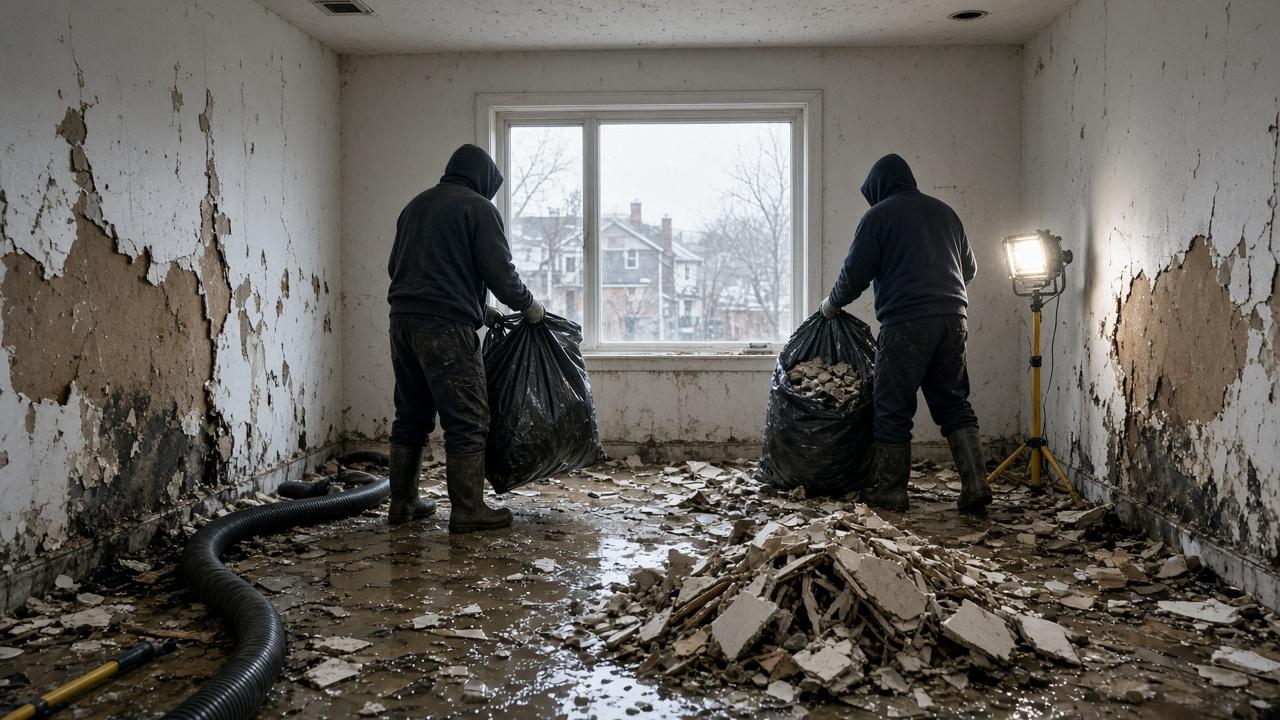
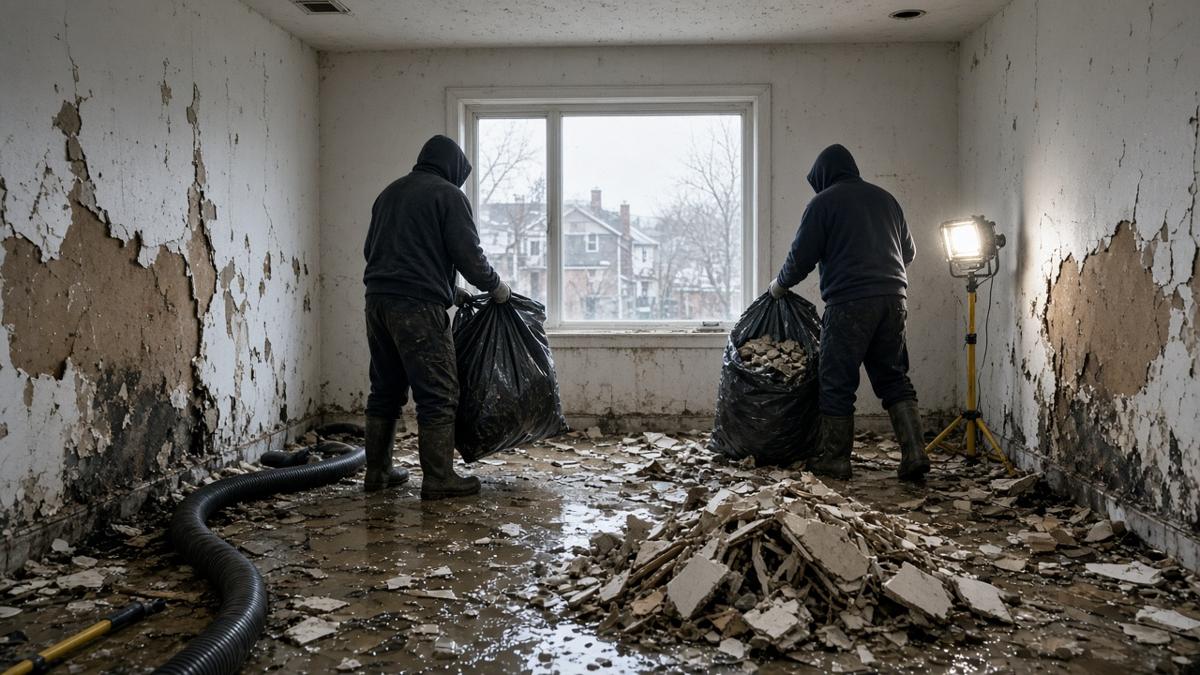
Collapsed ceiling material, damaged drywall, wet insulation, and non-salvageable materials are removed quickly and disposed of properly so drying can begin.
Standing Water Extraction
Industrial truck-mounted and portable extractors remove all standing water — from flooring, carpets, crawl spaces, and wall cavities.
Surface Cleaning & Disinfection
All surfaces that contacted water are cleaned with appropriate agents. Category 2 and 3 water losses receive EPA-registered disinfectants and follow IICRC decontamination protocols.
Content Separation
Damaged items are separated from salvageable ones, documented, and handled appropriately. Wet personal items are moved to allow drying access to floors and walls.
Controlled Demolition
Non-salvageable drywall, flooring, and insulation is removed systematically to allow structural drying — a step called 'flood cut' when walls are cut above the water line.
Ventilation & Air Quality
Air scrubbers and HEPA filtration clear debris, particulate, and odour from the air after cleanup — particularly important after sewage-involved losses.
Odour Control
Hydroxyl generators and deodorisation treatments address musty and sewage odours that linger after a water event — not just masking them but neutralising at the molecular level.
Full Documentation
Every step of the cleanup is documented with photos, written scope, and moisture readings — supporting your insurance claim and establishing the baseline for the drying phase.
Why Halifax Properties Need Professional Cleanup After Water Events
The instinct after water damage is to start moving things and drying them out as fast as possible. That instinct is right — speed matters. But doing it without the right equipment and process can create new problems: running household fans blows mold spores from wet surfaces throughout the property; moving wet drywall can distribute bacteria from a contaminated water loss; inadequate extraction leaves moisture in flooring that breeds mold under the surface.
Halifax's water damage cleanup specialists bring industrial equipment that homeowners don't have: truck-mounted extractors that can pull hundreds of gallons per hour, moisture meters that detect saturation you can't feel or see, and HEPA air scrubbers that capture particulate matter disturbed during demo and cleanup. These aren't nice-to-haves — they're the difference between a cleanup that sets up a successful restoration and one that sets up a mold problem.
There's also the insurance documentation angle. Nova Scotia insurers expect to see a professional scope of work, photo documentation, and moisture data when processing claims for anything beyond minor losses. A cleanup completed by a certified IICRC technician gives you the documentation trail your adjuster needs — and gives you leverage if the claim is disputed.
The Water Damage Cleanup Process in Halifax
Here's how our certified cleanup crews approach a water loss from arrival to handoff:
- 1
Scene Assessment & Water Classification
The source and category of water is confirmed (clean, grey, or black). This determines the PPE required and the decontamination protocol used throughout the cleanup.
- 2
Pre-Loss Documentation
Full photo and video documentation of the loss as found — before anything is moved or extracted. This is essential for insurance purposes.
- 3
Water Extraction
All standing water is removed using truck-mounted and portable extraction equipment. Submersible pumps handle any significant accumulation.
- 4
Content Manipulation
Furniture and belongings are moved, protected, or packed out to allow access to floors and walls and to prevent further damage.
- 5
Controlled Demo
Non-salvageable materials are removed per IICRC guidelines. Drywall is cut above the wet line, saturated insulation is bagged and removed, wet carpet and pad are extracted.
- 6
Cleaning & Disinfection
All exposed structural surfaces are cleaned and disinfected with appropriate agents. Concrete, wood framing, and subfloor are treated based on water category.
- 7
Odour Treatment
Air scrubbers and deodorisation equipment address residual odour in the air and on surfaces.
- 8
Handoff to Drying Phase
With cleanup complete, drying equipment is placed and the restoration timeline is established. Full documentation package is compiled for insurance submission.
Why Certified Cleanup Matters More Than Fast Cleanup
Speed without process creates problems. Here's why the cleanup quality matters as much as the response time:
No Hidden Moisture Left Behind
Thermal imaging and calibrated moisture meters find saturation that hands and eyes miss — inside walls, under floor assemblies, in ceiling cavities.
Category-Appropriate Decontamination
Grey and black water losses require specific cleaning agents and protocols. Running a mop doesn't cut it when you're dealing with contaminated water.
Documentation That Holds Up
Insurance adjusters see a lot of poorly documented claims. Professional scope, moisture data, and photo documentation make your claim process significantly smoother.
Common Questions About Damage Cleanup in Halifax
How soon after water damage should cleanup start?
As soon as the water source is controlled — ideally within hours. The longer water sits on structural materials, the deeper it penetrates and the harder it is to dry without removing materials. Most insurers also require 'reasonable mitigation steps' to be taken promptly — failing to act quickly can affect your claim.
Can I do water damage cleanup myself?
For very minor, clean-water losses — a small appliance leak caught immediately — homeowner cleanup may be adequate. For anything involving significant standing water, contaminated water, or saturated wall assemblies, professional equipment is necessary for proper drying. Most insurance companies also require professional documentation for claims.
What's a 'flood cut' and why is it done?
A flood cut is when drywall is cut at a horizontal line above the water damage line — typically 12 inches above the visible water mark. This allows the wall cavity and framing to be inspected, treated, and dried with drying equipment. It's standard practice for any loss where water has entered wall assemblies.
Related Restoration Services
Halifax Water Damage Restoration handles all water-related restoration needs across Halifax and the surrounding region. Return to the homepage for a full overview of what we do.
Ready to Get Your Damage Cleanup Started?
Call now and we'll connect you with a certified damage cleanup specialist serving Halifax, NS and surrounding areas.